About the campaign
How Trinidad and Tobago was elected to the Security Council, and what it brings to the role.
Trinidad and Tobago’s globally connected, multicultural identity shapes our approach to diplomacy, which is grounded in inclusion, mutual respect and the conviction that every country, regardless of size or circumstance, merits recognition in the pursuit of consensus.
With over sixty years of engagement within the United Nations system, our unwavering commitment to the rule of law, justice and equality guides our principled approach to advancing balanced and credible solutions, all core values of multilateral cooperation.
We recognize that improving the lives of people at national, regional and global levels depends fundamentally on the promotion and maintenance of peace and security, which are central pillars of Trinidad and Tobago’s foreign policy.
A constructive, consensus-driven partner
As a Small Island Developing State and an active voice within the Caribbean Community (CARICOM) and the Group of Latin American and Caribbean States (GRULAC), Trinidad and Tobago brings to the Security Council a perspective that bridges regional experiences with global decision-making. We believe in advancing practical, inclusive solutions while ensuring that the priorities and concerns of Small Island Developing States and small states are meaningfully reflected in the Council’s work.
Trinidad and Tobago approaches the work of the Security Council with a clear focus on practicality, balance and consensus. We are committed to engaging constructively, supporting solutions that are both credible and implementable, and working collaboratively with all Member States to navigate complex challenges and deliver outcomes that contribute to lasting peace and stability.
Trinidad and Tobago at the United Nations
- 1962
Trinidad and Tobago joins the United Nations
Admitted as a Member State in the year of independence.
- 1985–1986
First term on the Security Council
Trinidad and Tobago was elected to serve on the Council from 1 January 2027 to 31 December 2028.
- 2002
The International Criminal Court is established
Trinidad and Tobago played a foundational role in the creation of the Court.
- 2010
General Assembly resolution 65/69
Trinidad and Tobago introduces the resolution on women, disarmament, non-proliferation and arms control.
- September 2025
The campaign is launched
The Prime Minister launches the candidature at the General Assembly in New York.
- 3 June 2026
Elected to the Security Council
The General Assembly elects Trinidad and Tobago with 181 votes in a single round.
- 1 January 2027
The term begins
Trinidad and Tobago takes its seat for two years.
- March 2027
Presidency of the Council
Trinidad and Tobago presides over the Council for the month.
- 31 December 2028
The term ends
Members of the Security Council in 2027
Five permanent members and ten elected members. Five elected seats change each year.
- ChinaPermanent member
- FrancePermanent member
- Russian FederationPermanent member
- United KingdomPermanent member
- United StatesPermanent member
- BahrainElected until the end of 2027
- ColombiaElected until the end of 2027
- Democratic Republic of the CongoElected until the end of 2027
- LatviaElected until the end of 2027
- LiberiaElected until the end of 2027
- AustriaElected until the end of 2028
- KyrgyzstanElected until the end of 2028
- PortugalElected until the end of 2028
- Trinidad and TobagoElected until the end of 2028
- ZimbabweElected until the end of 2028
Leading Trinidad and Tobago’s engagement
-
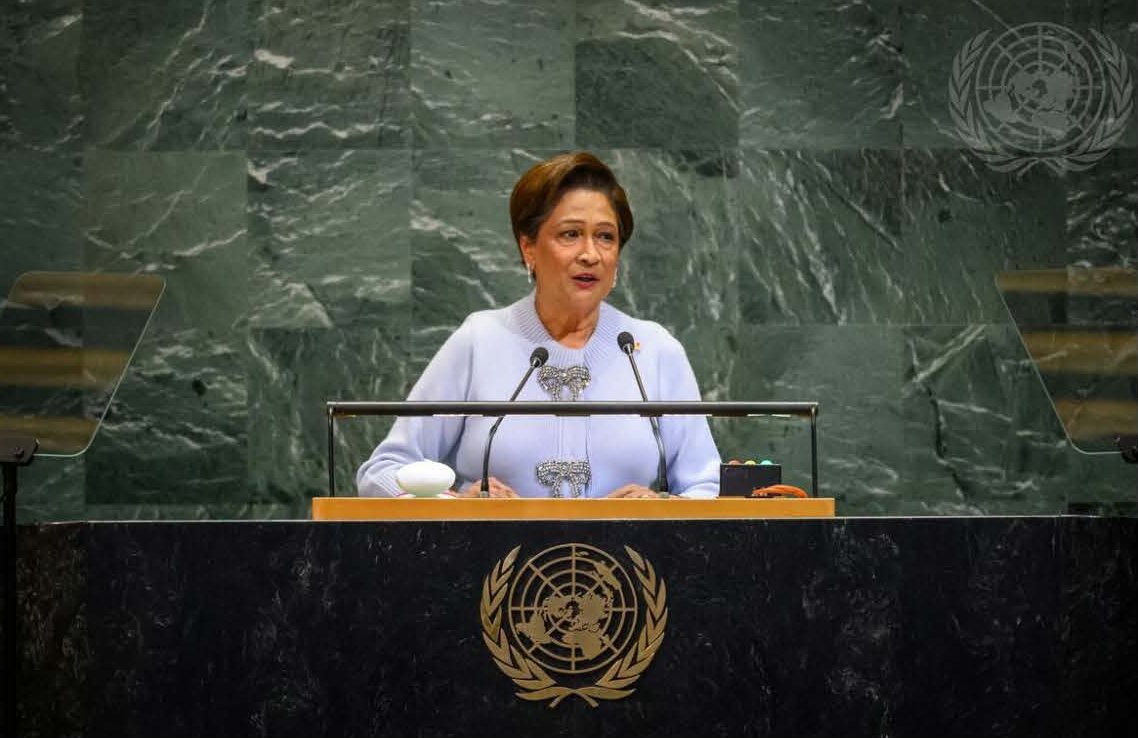
The Honourable Kamla Persad-Bissessar, S.C., M.P.
Prime Minister of the Republic of Trinidad and Tobago
-
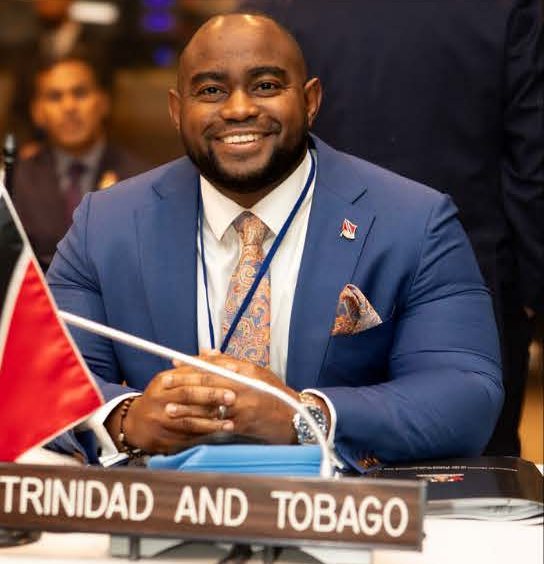
The Honourable Sean S.M. Sobers, M.P.
Minister of Foreign and CARICOM Affairs
-
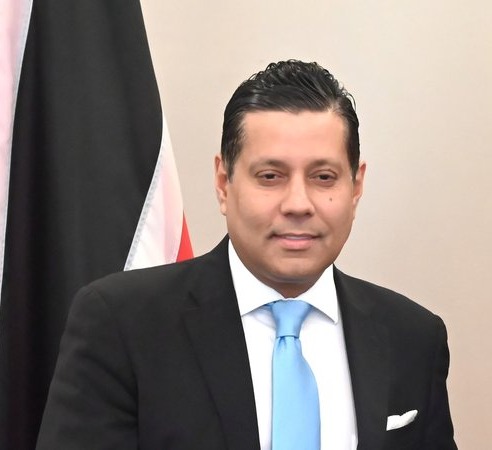
H.E. Ambassador Dr. Neil Parsan
Permanent Representative to the United Nations, New York